
1. European Summers Are Getting Hotter, and Household Electricity Demand Is Rising

Across Europe, hotter summers are increasing household electricity consumption. Air conditioners, cooling systems, and other appliances run longer, especially in Italy, Spain, Poland, Germany, and Ukraine. As electricity prices remain volatile, more homeowners are asking a simple question: How can we maximize the value of our own solar energy instead of buying expensive electricity from the grid?

2. Solar Panels Alone Are Not Enough

Many homes already have rooftop solar panels. During the day, solar production often exceeds household demand, with excess electricity exported to the grid. At night, however, solar generation stops and homeowners must buy electricity. The time when solar generates the most energy does not match the time when families use the most electricity.

3. Home Battery Storage Solves the Energy Timing Problem

Home battery storage bridges this gap by storing surplus solar energy during the day and supplying it when needed at night. It also provides backup power during outages. For example, if a PV system generates 20kWh in one day and the household consumes only 10kWh immediately, the remaining 10kWh can be stored and used after sunset, significantly reducing grid dependence.

4. Why Large-Capacity Batteries Are Becoming More Popular

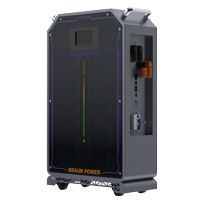
Traditional 5–10kWh batteries are no longer sufficient for many modern homes. Electric vehicles, heat pumps, air conditioning, and higher daily electricity consumption have driven demand for larger systems. As a result, 16kWh, 30kWh, and 32kWh LiFePO4 batteries are becoming increasingly popular. Braun Power’s 30kWh and 32kWh systems are designed for large homes, villas, and high-consumption households, featuring long-life LiFePO4 cells, intelligent BMS protection, scalable parallel expansion, and fast delivery from European warehouses.

5. Why Choose Braun Power?

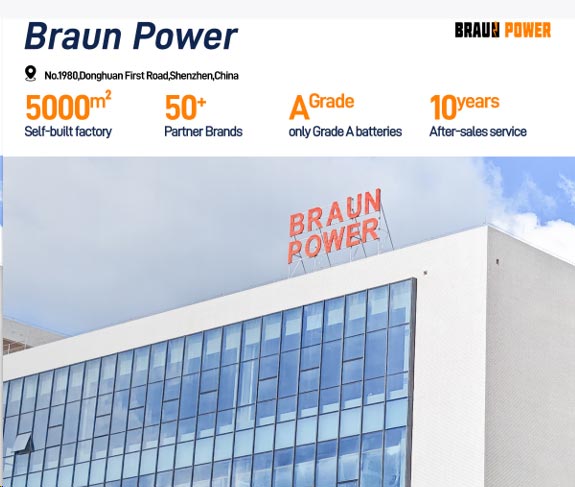
Braun Power specializes in residential and commercial LiFePO4 energy storage solutions. With more than 10 years of battery industry experience, a 6,000+㎡ manufacturing facility, European warehouse support, advanced BMS technology, and reliable after-sales service, Braun Power helps customers complete projects faster while reducing logistics risks.
6. Is Now the Right Time to Install Home Battery Storage?

Summer is the ideal time to evaluate your home’s energy needs. Installing battery storage today allows homeowners to increase solar self-consumption, reduce electricity bills, improve energy independence, and prepare for future energy price fluctuations. Make your solar investment work smarter with Braun Power home energy storage.

Conclusion

As European households seek greater energy security and lower electricity costs, combining solar panels with high-capacity battery storage has become a practical long-term solution. Whether you are planning a new solar installation or upgrading an existing system, Braun Power’s 16kWh, 30kWh, and 32kWh home battery systems provide reliable, scalable, and efficient energy storage for modern homes.

As the European residential energy storage market grows, fast local delivery, reliable supply, and high-quality battery systems have become as important as price.

Why Local European Inventory Matters

  • Faster delivery for installers and EPC projects.
  • Reduced logistics and customs risks.
  • Flexible purchasing for urgent and small-batch orders.
  • Improved project scheduling and cash flow.

Braun Power Energy Storage Solutions

Picture Product Highlights Applications
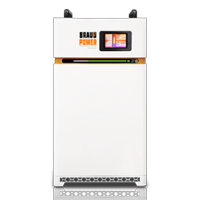
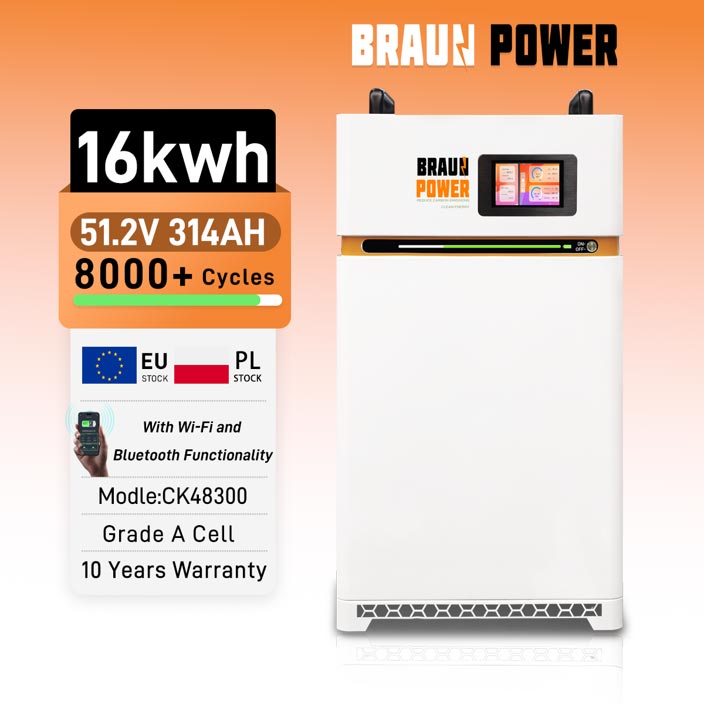
16kWh Home Energy Storage System 16kWh Home Energy Storage System Ideal for homes and small PV systems. Supports mainstream hybrid inverter protocols. Easy installation and reliable daily backup. Homes
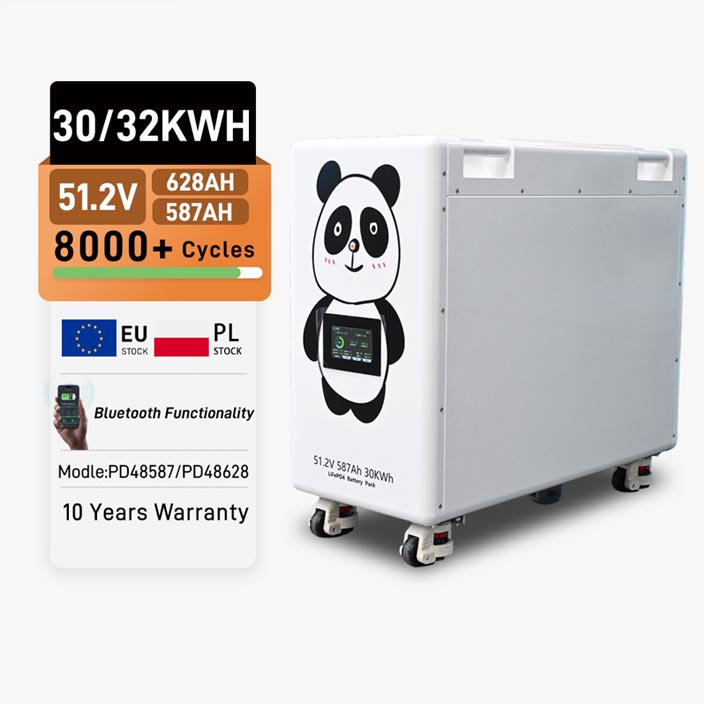
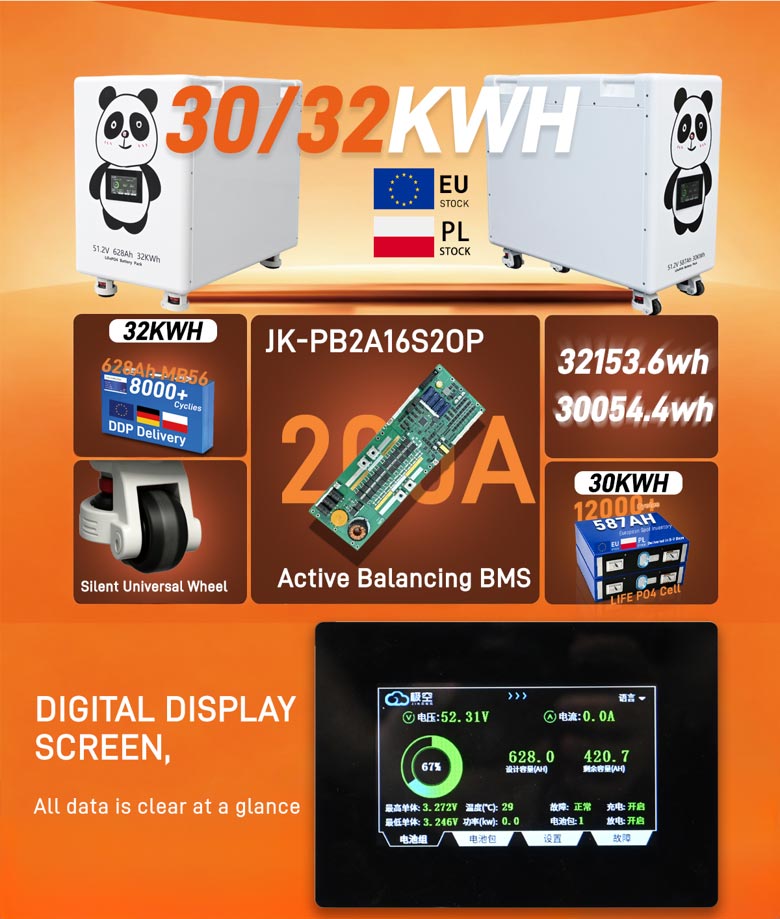
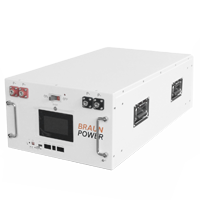
30kWh Energy Storage System 30kWh Energy Storage System Built with CATL 587Ah Grade A cells. One battery can replace two smaller systems, reducing wiring and installation time. Whole-home backup
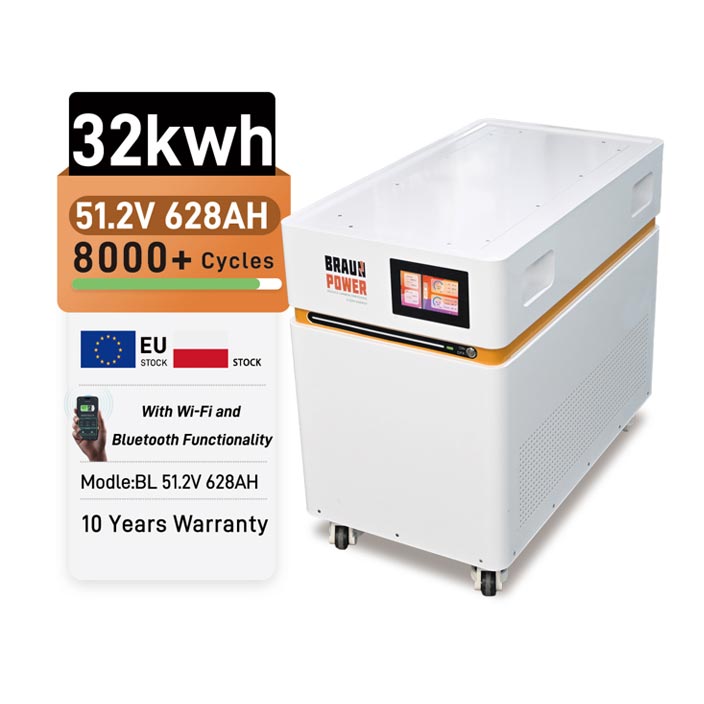
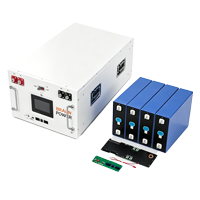
32kWh Energy Storage System 32kWh Energy Storage System Powered by EVE 628Ah Grade A cells. Designed for villas, farms, off-grid systems and high-load residential or commercial projects. Villas / Commercial

European Warehouses

Poland Warehouse: 16kWh, 30kWh, 32kWh systems and selected LiFePO4 battery cells available for fast delivery across Europe.

Kyiv Warehouse: Local stock for selected battery systems and cells with pickup support for Ukrainian customers.

Conclusion

Braun Power combines Grade A battery cells, advanced LiFePO4 battery systems, and local European inventory to help installers, distributors, and homeowners complete projects faster and more reliably.

Which is more suitable for your family: 16kWh, 30kWh, or 32kWh? With the increasing popularity of home solar power systems, more and more families are considering installing energy storage batteries to store the electricity generated by solar power during the day and continue using it at night or during power outages, thereby reducing electricity bills and increasing energy independence.

However, many people encounter the same problem when purchasing: what capacity energy storage battery should they choose? 16kWh, 30kWh, or 32kWh? In fact, there is no absolutely “best” capacity, only the solution that best suits your family’s electricity needs.

Step 1: Understand your family’s daily electricity consumption. Before choosing an energy storage system, it is recommended to first calculate your family’s average daily electricity consumption.

Recommended Battery Capacity

Household Type Daily Electricity Consumption Recommended Battery Capacity
Small Houses/Apartments 8–15kWh 16kWh
Standard Detached Houses 15–25kWh 30kWh
Large Houses/Villas/Farms 25kWh and above 32kWh or higher

If your home also has high-energy-consuming equipment such as heat pumps, central air conditioning, or electric vehicle charging stations, it is recommended to reserve some capacity margin for a better user experience.

16kWh: Economical and practical, suitable for most households

A 16kWh energy storage system is suitable for everyday household use, meeting basic electricity needs such as nighttime lighting, refrigerators, televisions, and internet devices.

For households with a 5kW photovoltaic system, 16kWh is usually sufficient to effectively increase solar self-consumption and significantly reduce electricity bills.

If you have a limited budget and want to recoup your investment cost as quickly as possible, 16kWh is a very worthwhile option to consider. 30kWh: Balancing Capacity and Cost-Effectiveness

30kWh is more suitable for households or small businesses with high electricity consumption.

For example:

  • Large family members;
  • Equipped with heat pumps or central air conditioning;
  • Desiring minimal grid independence at night;
  • Planning to increase photovoltaic capacity in the future.

Compared to smaller capacity systems, 30kWh provides longer power supply time and is more suitable as a backup power source during power outages.

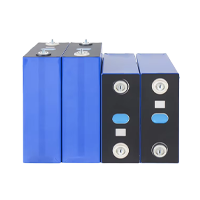
Braun Power 30kWh energy storage system uses CATL 587Ah cells and is combined with a smart JK BMS, balancing safety, cycle life, and overall cost, making it a popular choice for many European installers.

32kWh: Meeting High Load and Off-Grid Needs

For villas, farms, small commercial and industrial users, or households seeking greater energy independence, a 32kWh energy storage system provides more ample power reserves. Larger capacity not only means longer backup time but also reduces the number of deep discharges, thus extending battery life. The Braun Power 32kWh system uses EVE 628Ah cells and is equipped with a high-performance DAREN BMS, meeting the needs of high-load households and long-term stable operation.

Besides capacity, what other factors should be considered?

Besides capacity, the following points should be emphasized when purchasing an energy storage system:

  • Cell brand and quality;
  • BMS management system performance;
  • Cycle life;
  • Support for parallel expansion of multiple units;
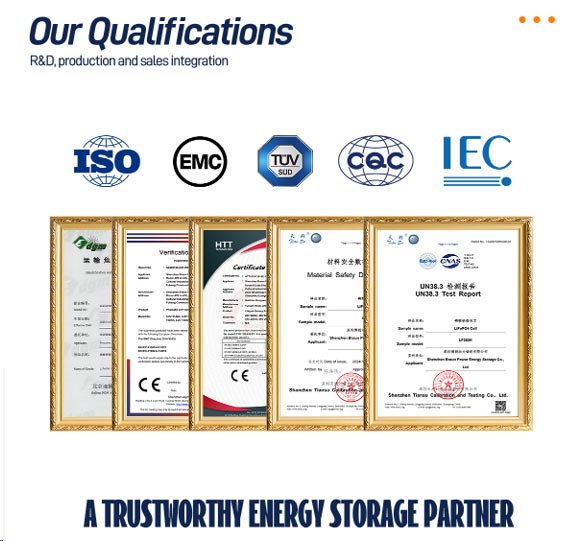
  • CE, UN38.3, and other certifications;
  • Local European warehouse and after-sales support.

These factors directly affect the product’s safety, lifespan, and long-term maintenance costs.

Choosing an energy storage system is not simply about having the largest capacity; it should be based on a comprehensive consideration of the household’s actual electricity needs, the scale of the photovoltaic system, and future expansion plans. Braun Power offers a variety of energy storage solutions, including 16kWh, 30kWh, and 32kWh, to meet the needs of different residential and commercial users. Choosing the right capacity is essential to maximizing the value of a home energy storage system!